

Sourced history
Two routes into General Electric
The two engine brands reached GE at different times. Jenbacher came first: GE acquired the company in 2003. Its manufacturing roots lay in Jenbach, an Austrian Alpine town where workers had been producing gas engines since 1957. Waukesha joined GE through the acquisition of Dresser Inc. in 2011. By the time of the Distributed Power sale, the business was known for both engine lines. GE’s account distinguished their principal applications: Jenbacher engines generated electricity, while Waukesha engines typically served the midstream oil and gas industry, including work in remote and demanding environments.
Sources: [1]
Sourced history
Electricity from unconventional fuels
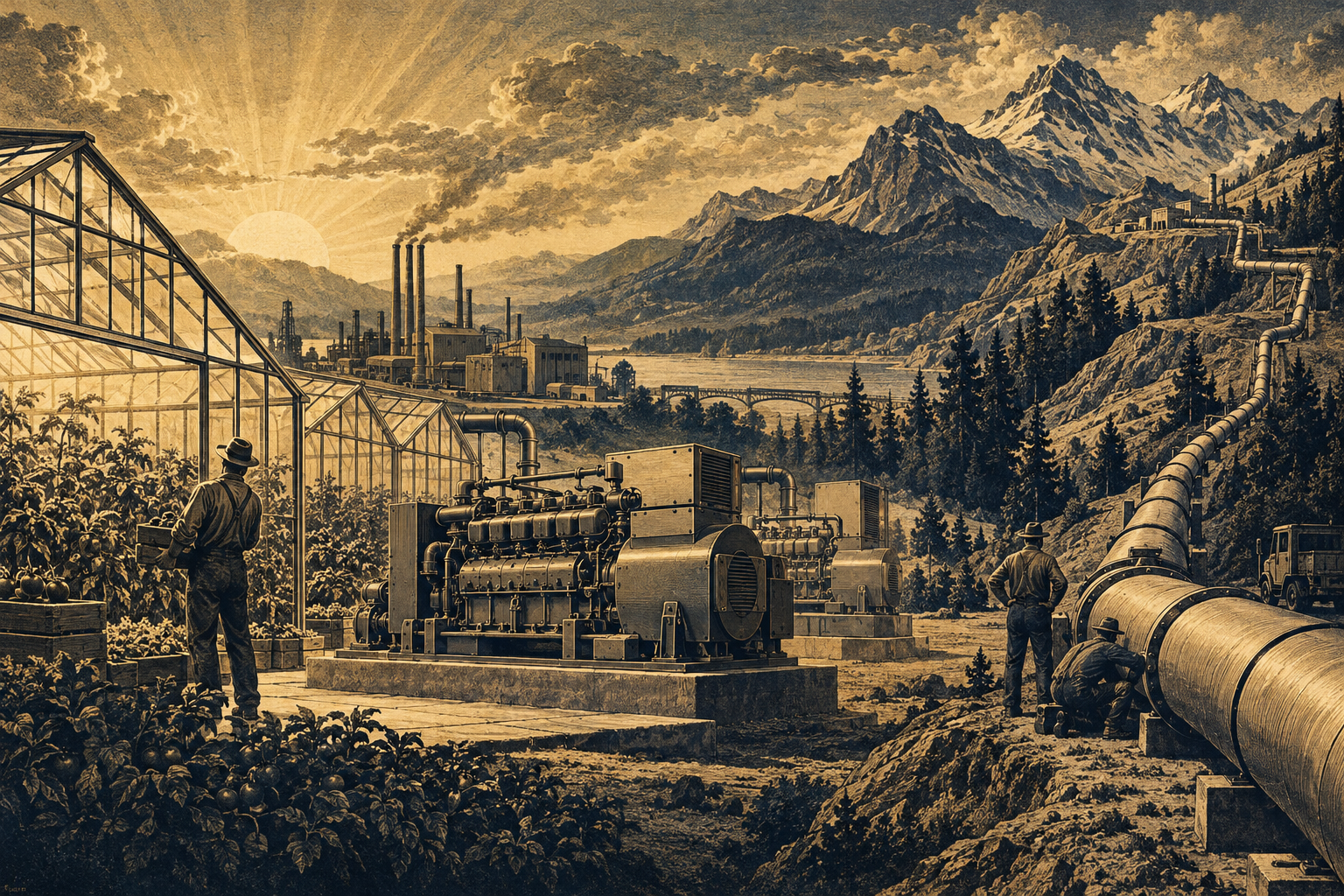
GE’s November 2018 account reported more than 20,000 Jenbacher gas engines in over 100 countries. Their fuel options included landfill gas, flare gas, sewage gas and biogas. The largest Jenbacher engine could produce as much as 10 megawatts, described by GE as enough electricity for a small town. The applications could be strikingly local. A Wisconsin hospital powered its Jenbacher engines with landfill methane and biogas derived from cheese whey and brewing waste. In Holland, tomato grower Prominent used 53 Jenbacher engines to generate 150 megawatts of electricity and provide greenhouse heat. Some of those engines were equipped with sensors and apps.
Sources: [1]
Sourced history
Power after the storm
One example from the GE period placed a Jenbacher engine at the center of emergency community life. When Typhoon Haiyan struck the Philippines in 2013, an engine on Cebu survived winds of 150 miles per hour. It supplied electricity to hospitals and evacuation centers, while people also used it to recharge their phones. This was a different setting from the hospital and greenhouse installations, but it likewise showed a gas engine supplying power for immediate local needs.
Sources: [1]
Sourced history
Waukesha’s high-altitude assignment
For Waukesha, GE highlighted the work of Transportadora de Gas del Peru. The operator used a series of Waukesha engines to move natural gas through a pipeline crossing the Andes and reaching an elevation of 13,400 feet. The 700-mile pipeline connected inland gas fields with coastal cities. GE reported that it supplied 80 percent of Peru’s energy, including fuel used to generate half the country’s electricity. Here, the engines’ role was gas transport rather than the direct electricity-generation applications emphasized for Jenbacher.
Sources: [1]
Sourced history
The ownership boundary—and the leadership record
Advent International completed its acquisition of GE’s Distributed Power business on November 6, 2018. GE reported a purchase price of $3.25 billion. The transaction covered the Jenbacher and Waukesha product lines, the digital platform and associated service offerings, with main operating sites in Austria, Canada and the United States. The business emerged from GE ownership under the name INNIO, while retaining the Jenbacher and Waukesha product identities. The closing announcements identified Carlos Lange as president and CEO of INNIO. That title belongs to the newly independent business in these sources; it does not establish a prior GE office or tenure. Neither transaction account identifies a GE-period plant manager.
Commentary
Heritage perspective
In our view, this chapter deserves a place in GE’s legacy because it brings industrial history down to the scale of practical work: warming greenhouses, sustaining essential services and moving fuel across difficult terrain. It also illustrates why heritage writing must distinguish a product’s continuing identity from its corporate ownership. Remembering the GE years accurately means preserving both the engines’ applications and the boundary at which those businesses left GE.
Sources
- [1] Advent International Acquires GE's Distributed Power Business For $3.25 Billion | GE News — ge.com
- [2] INNIO Completes Carve-out from General Electric and emerges as Stand-alone Energy Company | INNIO — INNIO
Written in original words with AI help from the sources above and automatically checked against them. Facts, quotations and commentary are labeled separately; credit belongs to the original authors. GE Heritage Village is independent and not affiliated with GE or Crotonville.