

Sourced history
A Plan Interrupted
GE entered 2020 with strength in Aviation and Healthcare and turnaround efforts underway in Power and Renewable Energy. In his annual shareholder letter, Chairman and CEO Larry Culp described how the pandemic overturned that starting position: air travel declined rapidly, and global supply chains were disrupted. His account organized GE’s response around three principles—recognizing conditions as they were, redefining success around immediate priorities, and executing the resulting plan. Meetings took place daily, sometimes hourly, as leaders gathered information and adjusted to uncertainty about the crisis’s severity and duration.
Sourced history
Hospital Needs Reshape Factory Work
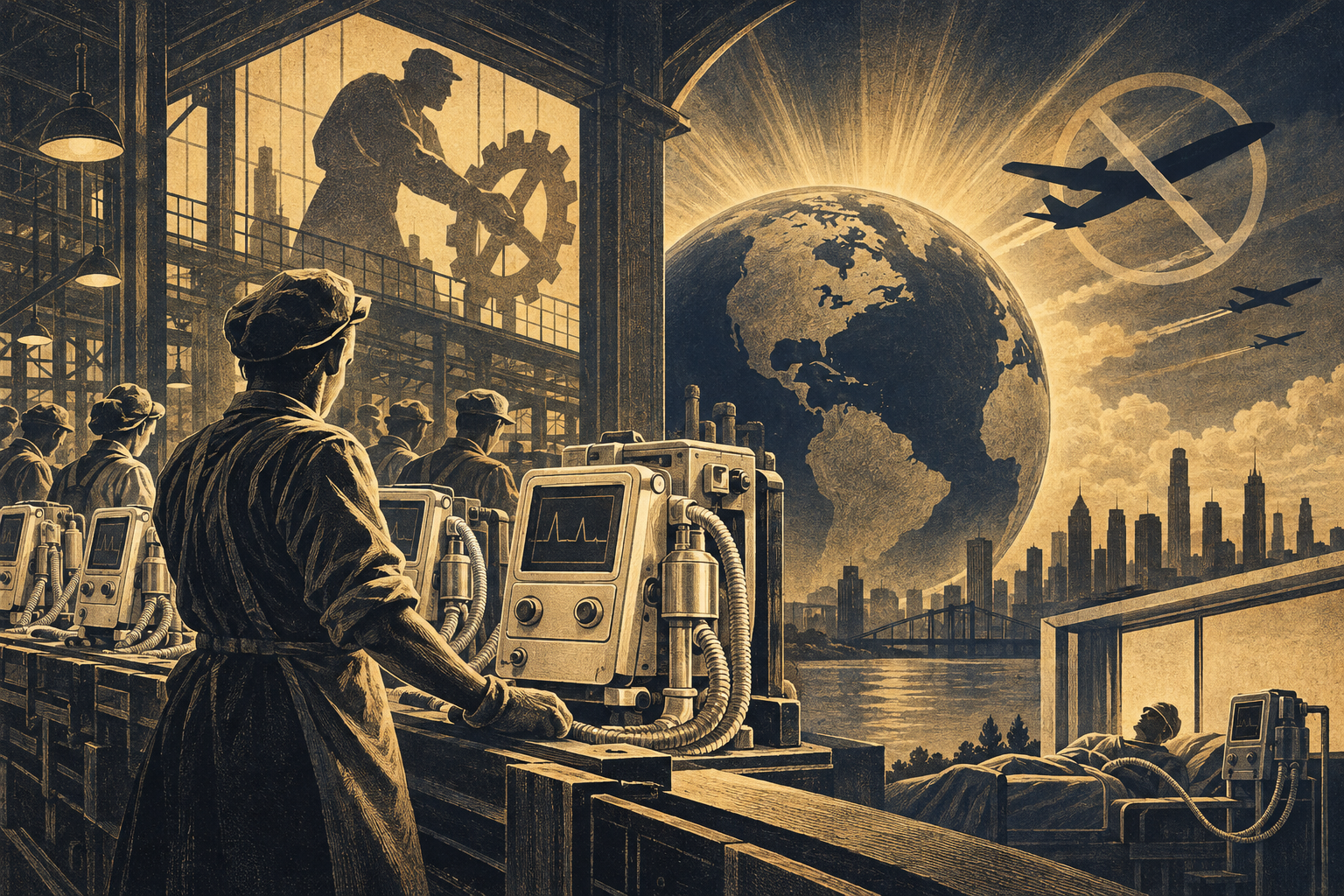
For Healthcare, the emergency demanded greater production of equipment used to diagnose and treat patients with COVID-19. GE’s 2020 annual report stated that the business quadrupled ventilator production while supporting customers with installation and service on-site. Cooperation also crossed business boundaries. An Aviation factory in the United Kingdom made available floor space for Healthcare when demand for patient monitors exceeded production capacity. Using lean principles and materials already available, the Healthcare team produced more than 5,000 monitors in 15 weeks, starting from zero. Culp’s account treated shipping another ventilator as one practical measure of success during the emergency.
Sources: [3]
Sourced history
Aviation’s Painful Adjustment
Aviation faced a different management problem. GE reduced costs, preserved cash, and managed debt obligations; Culp also reported deep cuts to the global Aviation workforce. He described that decision as extraordinarily difficult but necessary to protect the business amid pressure on airline customers. Aviation helped customers manage fleets and maintenance plans as they sought to conserve cash. Across GE, orders and revenue declined in 2020, primarily because of Aviation. The shareholder letter therefore paired its account of essential service and employee commitment with an acknowledgment of severe business damage and workforce reductions.
Sources: [3]
Sourced history
Strazik’s Priority: Keep Power Available
On April 8, 2020, GE Gas Power CEO Scott Strazik described employee health and safety as the priority while outlining work to maintain electricity supplies. He reported additional precautions across the business and continued operation of more than 90 percent of its manufacturing facilities considered essential. Travel restrictions created unusual demands: 11 team members from five countries remained abroad after completing a Middle East assignment on February 24. According to Strazik, they subsequently performed nearly 7,000 combined hours of additional work in Kuwait, including seven outages and six machine tunings. His message credited factory workers, field teams, and employees providing support remotely.
Sources: [1]
Sourced history
Managing Through a Second Pandemic Year
GE’s 2021 annual report described continuing pandemic and supply-chain challenges rather than an uncomplicated return to normal. Aviation’s reported margin reached 13.5 percent, supported by operational improvements and increased shop visits, although revenue was slightly lower. The business continued managing industry-wide material and labor shortages associated with COVID-19. Healthcare, which felt supply-chain disruption sooner than GE’s other businesses, responded through cost, sourcing, and logistics management. Across the company, GE emphasized lean and decentralization, moving decisions closer to customers. Its operating system included monthly performance reviews and quarterly attention to talent, strategy, and budgeting.
Sources: [4]
Commentary
Perspective: A Legacy of Contrasting Responsibilities
In our view, this episode deserves a place in GE’s heritage without becoming a simple triumphal story. Emergency manufacturing and essential-service work belong alongside the human consequences of retrenchment. Read together, these corporate accounts suggest that pandemic leadership was less about a single dramatic decision than about reconciling urgent public needs, employee safety, and business survival. They are valuable evidence of management’s priorities, but not an independent verdict on every outcome.
Sources
- [1] Our Response to COVID-19: Helping the World Power Through | GE News — ge.com
- [2] GE releases 2020 Annual Report | GE News — ge.com
- [3] GE 10-K 2020 — ge.com
- [4] GE 2021 10-K — ge.com
Written in original words with AI help from the sources above and automatically checked against them. Facts, quotations and commentary are labeled separately; credit belongs to the original authors. GE Heritage Village is independent and not affiliated with GE or Crotonville.